Guides
New or used music studio equipment: what each really costs
New or used studio gear decided by category: where secondhand is safe, where it is not, an inspection routine, and the costs a used price hides.
What to take away
- New or used music studio equipment is not one decision. The size of the discount matters less than the category, because some categories tolerate age and some do not.
- Passive, mechanical, and analog items usually survive. Anything with software, a fan, or a connection standard behind it usually does not.
- Inspect before money moves, in person where possible, with power applied and audio passing through it.
- A used price hides four costsservice, missing parts, downtime, and the resale you will not get.
- Buying a whole studio's assets can include media holding other people's recordings. Do not assume those come with the sale.
- Typical savings run near 15 percent on current-model microphones and reach 50 percent or more on discontinued analog outboard and interfaces two generations back.
The question is the category, not the discount
Every used purchase is a bet that the remaining working life is worth the saving. That bet pays off in some categories and consistently fails in others, and the difference is structural rather than luck.
Items with few active parts, simple mechanics, and no dependence on a current software platform age slowly. A repair tech who has seen one before can usually keep them running for years.
Items whose usefulness rests on being current, or on a driver that someone else decides to keep maintaining, have a working life that ends on a date you do not control. A two-generation-old interface can cost less than a microphone and still be the worse buy.
The equipment and setup reasoning sets out which stages of the signal path deserve real money. This page is about what each one costs new, what it costs used, and where the gap is not worth taking.
Category by category
Prices below are typical US street prices as of 2026, not list prices. Used figures assume working condition, no service history, and a private sale rather than a dealer warranty. Dealers typically add 15 to 25 percent on top.
Used Gear: Safe or Risky
Safe
- Microphones
- Usually safe
- Stands, clips, cases
- Safe
- Analog preamps
- Often safe
- Monitors
- Reasonable with care
- Cabling
- —
- Interfaces
- —
- Computers
- —
- Software licenses
- —
Risky
- Microphones
- —
- Stands, clips, cases
- —
- Analog preamps
- —
- Monitors
- —
- Cabling
- Buy new
- Interfaces
- Risky
- Computers
- Rarely worth it
- Software licenses
- Check transferability
| Category | New, typical | Used, typical | Used verdict | What decides it |
|---|---|---|---|---|
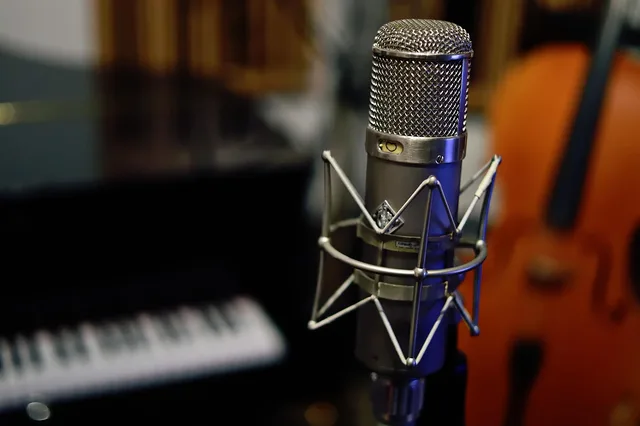
| Microphones (Shure SM7B, Audio-Technica AT2020, Neumann U87 Ai) | SM7B about $400, AT2020 about $100, U87 Ai about $3,600 | SM7B $300 to $340, vintage U87 $3,000 to $5,000 | Usually safe | Capsule condition, service history, no impact damage |
| Stands, clips, cases (On-Stage MS7701B, K&M 210/9) | $30 to $80 | $10 to $20 | Safe | Visible wear only |
| Analog preamplifiers and outboard (API 512c, Warm Audio WA73-EQ, dbx 160A) | API 512c about $1,100, WA73-EQ about $600 | API 512c $700 to $850, dbx 160A $200 to $300 | Often safe | Availability of parts and someone who can service it |
| Monitors (Yamaha HS8, KRK Rokit RP5 G4) | HS8 about $400 each, Rokit RP5 G4 about $180 each | HS8 pair $500 to $650 | Reasonable with care | Driver condition, surrounds, matched pair, no repairs done badly |
| Cabling and connectors (Hosa, Mogami) | 10 ft XLR about $15 to $40 | Little used stock | Buy new | Cheap new, and a failing cable is a stopped session |
| Interfaces and conversion (Focusrite Scarlett 2i2, RME Babyface Pro FS, Universal Audio Apollo Twin X) | Scarlett 2i2 about $200, Babyface Pro FS about $900 | Scarlett third generation $110 to $150, Apollo Twin X $700 to $900 | Risky | Driver support and the connection standard behind it |
| Computers (Apple Mac mini M2, Mac Studio M2 Max) | Mac mini about $600, Mac Studio about $2,000 | M1 Mac mini $400 to $450 | Rarely worth it | Support window, thermal noise, storage already worn |
| Software licenses (Ableton Live 12 Suite, Pro Tools Artist) | Suite $749, Artist about $10 a month | Suite licenses resell around $450 to $600; iLok charges $25 to move a plugin license between accounts | Check first | Many are not transferable at all |
| Acoustic treatment (GIK Acoustics 244, Auralex Studiofoam) | GIK 244 panel $100 to $150, Studiofoam tiles $10 to $20 each | Panels often half price or less | Depends | Cut for someone else's room; measure before agreeing |
| Instruments (Fender American Professional II Stratocaster, Behringer Model D) | American Professional II about $1,800, Model D about $300 | Mexican-made Strat $500 to $700, used analog synths 30 to 50 percent under new | Often excellent | Condition and setup, as with any instrument purchase |
Two lines deserve emphasis. Cabling is where the smallest saving buys the largest risk, because a session that stops on an intermittent cable costs more than every cable in the building. And a software license that cannot be transferred is not a discount; it is a purchase of nothing.
Inspecting a used item before money moves
- Ask what it has been used for and by whom, and ask when it was last serviced. A seller who cannot answer is telling you something.
- Look for impact damage, corrosion, heat marks, and repairs done with the wrong parts. Open the case where the seller allows it.
- Power it up and let it sit. Listen for hum, buzz, and anything that changes as it warms.
- Pass real audio through every input and output, one at a time. Intermittent faults hide in the channel nobody tested.
- Work at low level first and raise it slowly. Faulty amplification can produce a sudden loud output, and the Occupational Safety and Health Administration's guidance on controlling occupational noise exposure is a reminder that the person doing the testing has hearing to protect.
- Check the mains lead, plug, and any internal fusing. Anything you are unsure of goes to a qualified electrician before it is used, which is the ordinary application of the Occupational Safety and Health Administration's safety management approach: find the hazard before it finds you.
- Get the serial number and add it to your asset register the same day, alongside the rest of the equipment checklist items.
Independent techs typically charge $75 to $150 an hour for bench work, often with a one-hour minimum. A $150 inspection is cheap next to a $200 repair you did not see coming.
Used Gear Inspection Routine
- Ask use history and last service date
- Check for impact, corrosion, heat marks
- Power up and listen for hum
- Pass audio through every input and output
- Test at low level, raise slowly
- Check mains lead, plug, fusing
- Record serial number in asset register
If the item cannot be inspected, treat the price as if it included a repair.
What used never saves you money on
Downtime is the first hidden cost. An item that fails mid-session costs you the session, the client's confidence, and the hours spent diagnosing it. A tracking day billed at $300 to $1,000 is what is really at stake.
Four Hidden Costs of Used
- Downtimesession, client confidence, diagnosis hours
- Serviceolder analog needs work, tech may be absent
- Missing partsPSU, breakout cable, rack ears
- Resalebottom of value curve recovers nothing
Service is the second. Older analog equipment often needs work before it is trustworthy, and the person who can do that work is not always available in your city. Bench rates typically run $75 to $150 an hour.
Missing parts are the third: the power supply, the breakout cable, the rack ears, the one connector that is no longer made. A replacement supply for a discontinued unit often costs $80 to $200, when one exists at all.
Resale is the fourth. Buying near the bottom of a category's value curve means there is nothing left to recover when you sell.
Add those four to the asking price before comparing it with a new item. A $700 used preamp with a $200 recap is a $900 preamp, and sometimes used still wins comfortably, and now you know by how much.
Buying another studio's assets
Occasionally a whole studio comes up for sale. That is a different transaction, and two parts of it need care. Whole-room packages typically ask 25 to 40 percent of the gear's original cost, which is only a bargain if you need most of the list.
The first is the acoustic construction, which usually belongs to the building rather than the seller, so confirm what is actually being sold.
The second is the media. Drives and archives may hold former clients' sessions, and several separate interests can attach to one recording, as the Copyright Office study on copyright and the music marketplace makes plain; do not assume those files transfer with the hardware.
Agree in writing that media will be returned or wiped, and take anything unclear to a qualified music attorney. The rest of the paperwork belongs in your compliance file.
Who is allowed to buy
One quiet failure mode: an engineer buys gear the studio did not agree to, or a technically minded staff member accumulates items nobody uses.
Set the rule with the rest of your hiring and training arrangements: purchases above a level you set, often $500, need the owner's agreement, and every purchase names the service it supports.
The same discipline applies later, when a second room makes the question larger rather than different. Wait until the expansion case is actually made before duplicating a signal path.
Common questions
Is used gear a way to open a studio for less?
Partly, and only in the right categories. A starter rig of one interface, two microphones, stands, and cables runs about $700 to $1,200 new, and roughly half that used. It is never a substitute for the building work, which is where the real money goes and where nothing can be bought secondhand.
How do I value a used item fairly?
Watch completed sales rather than asking prices, and adjust for condition, missing parts, and how much service the category typically needs. A $700 preamp with a $200 recap is a $900 preamp, and that is the number to compare with new.
Should I buy vintage equipment?
Only if you can get it serviced locally and you can name the client work it will do. A vintage U87 at $3,000 to $5,000 is a working tool in one studio and an expensive object with a maintenance bill in another.
Is it safe to buy monitors used?
Often, if the drivers and surrounds are sound and the pair is genuinely matched. A used Yamaha HS8 pair at $500 to $650, against $800 new, is worth an hour of listening on material you know well.