Guides
The starter equipment list for a music studio in 2027
Music studio equipment decisions: why the room outranks the rack, which gear dates and which does not, and what monitoring and storage really demand.
What to take away
- The room outranks everything in it. This starter equipment list for a music studio begins there: a modest signal path in a well built room beats an expensive one in a bad room, and clients can hear the difference.
- Buy along the signal path, from source to monitoring, and buy against a service you already sell.
- Some categories date quickly and some barely date at all. Knowing which is which changes what is worth owning outright.
- Monitoring is the one place where compromise is repaid with bad mixes and lost clients, because every decision in the room is made through it.
- You are holding other people's recordings. Storage and backup are part of the equipment plan, not an afterthought.
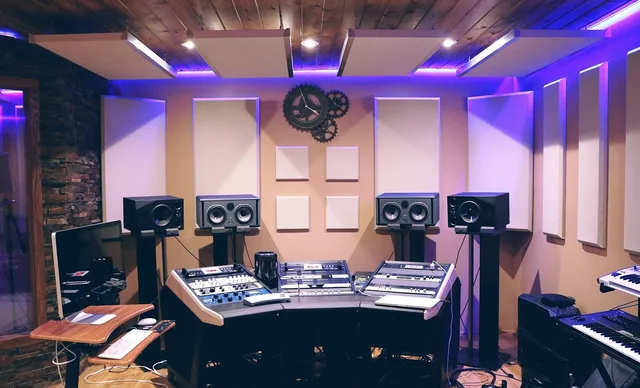
The room comes before the rack
Nearly every studio that fails technically fails in the same way: the money went into visible equipment and the building was left as it was found.
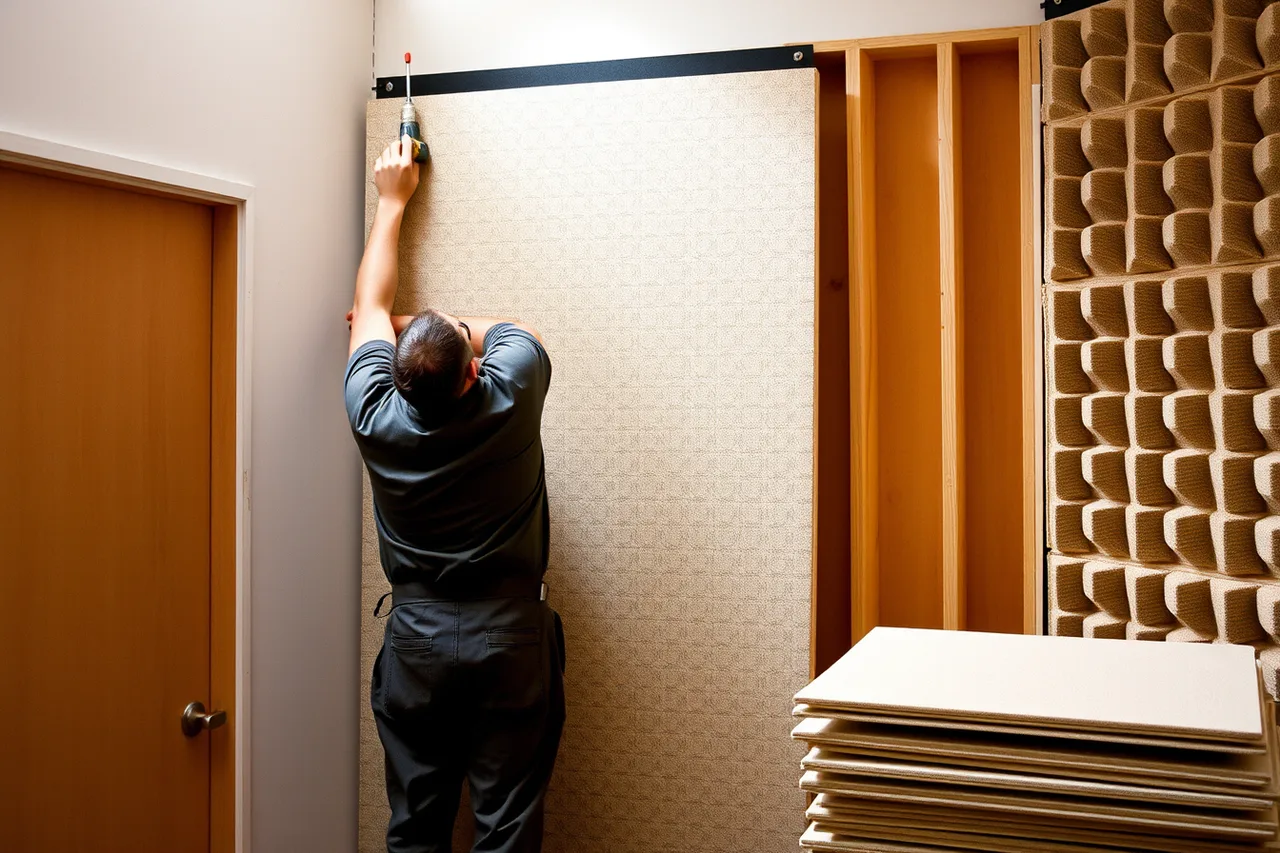
A microphone cannot un-hear a room. It captures reflections arriving a few milliseconds after the direct sound, low frequency buildup in a small space, and air handling hum. None of that is repairable afterward, so an inexpensive microphone in a treated space consistently outperforms a costly one in an untreated one.
Treatment leads the buying list. GIK Acoustics 244 bass traps run about $130 to $200 each depending on fabric, and four of them cover the first reflection points and two corners.
A DIY route uses Owens Corning 703 rigid fiberglass, typically $15 to $20 for a 2 inch by 2 foot by 4 foot panel, wrapped in breathable fabric. Rockwool Safe'n'Sound, about $50 a bag, fills the cavities behind the drywall.
Isolation and treatment therefore come first in the budget and first in the calendar. The site selection reasoning covers what the building has to give you before treatment can do anything useful, and the wider startup framing explains why this ordering decides everything downstream.
The signal path, in the order sound travels
Think about equipment as a chain, and let the chain set your buying order. Each stage can only pass on what it received.
Signal path buying order
- Source and room
- Microphones
- Preamplifiers
- Conversion
- Computer and interface
- Monitoring
- Headphones and cue
| Stage | What it decides | Where money is well spent |
|---|---|---|
| Source and room | Everything downstream | Treatment, isolation, quiet ventilation |
| Microphones | Character and usable options | A small, deliberate set rather than a wide one |
| Preamplifiers | Gain quality and noise floor | Clean and quiet before colorful |
| Conversion | The transparency of the record and playback path | Reliability and stable clocking |
| Computer and interface | Session stability and track count | Storage speed and thermal quietness |
| Monitoring | Every decision anyone makes in the room | The largest sensible share of what remains |
| Headphones and cue | Whether musicians can perform | Enough mixes for the sessions you actually run |
Named starter picks, by stage
| Stage | Named pick | Typical US price, early 2026 | Who it suits |
|---|---|---|---|
| Treatment | GIK Acoustics 244 bass trap | about $130 to $200 each | Small rooms that need low frequency control |
| Treatment, DIY | Owens Corning 703 rigid fiberglass, 2 inch | about $15 to $20 a panel | Studios building their own frames |
| Vocals and loud sources | Shure SM7B dynamic | about $400 | Vocals, guitar cabs, kick, imperfect rooms |
| Condenser | Rode NT1 5th Gen | about $250 with shockmount and pop filter | Singer-songwriters and acoustic guitar |
| Entry condenser | Audio-Technica AT2020 | about $99 | First microphone and spare channels |
| Toms and guitar cabs | Sennheiser MD 421-II | about $400 | Toms, amps, brass |
| Kick drum | Audix D6 | about $200 | Kick, floor tom, bass cabinet |
| Clean preamp | Focusrite ISA One | about $600 | One channel of clean gain, switchable impedance |
| Colored preamp | Warm Audio WA-73 | about $700 without EQ | Neve style tone on vocals and drums |
| Interface | Focusrite Scarlett 2i2 4th Gen | about $200 | Two inputs, USB-C, steady drivers |
| Interface, step up | RME Babyface Pro FS | about $1,000 | Low latency sessions and long driver support |
| Monitor | Yamaha HS5 | about $200 each | Small control rooms |
| Monitor | Kali Audio LP-6 v2 | about $200 each | More low end on a small budget |
| Monitor, step up | Adam Audio T7V | about $300 to $350 each | Mid-size rooms that need detail |
| Tracking headphones | Sony MDR-7506 | about $100 | Tracking, editing, low end checks |
| Mix checking headphones | Sennheiser HD 600 | about $350 | Open back reference for mix checks |
| Cue system | PreSonus HP4 | about $130 | Four headphone mixes in one rack space |
| DI box | Radial ProDI | about $100 | Keys, bass, long cable runs |
| Stands | K&M 210/9 boom | about $90 | Heavy microphones that stay put |
| Power | Furman M-8x2 | about $150 | Rack power with surge protection |
| Storage | Samsung T7 Shield, 2 TB | about $200 | Session drives that travel |
| Backup | Backblaze Personal Backup | about $99 a year for one computer | Automatic offsite copies |
| DAW | Reaper | $60 discounted, $225 commercial | Low cost, fast updates |
| DAW | Logic Pro | $199 one time | Mac rooms that want instruments included |
Those prices are typical US street prices in early 2026. They move with sales, currency, and stock, so check current listings before ordering.
The common error is to buy in reverse: an expensive console or a large microphone collection while the monitoring is an afterthought and the room is bare. That produces a studio that looks equipped and cannot deliver a mix that survives being played anywhere else.
What dates and what does not
This distinction should drive what you own, what you rent, and what you hire in for a session.
| Holds up | Dates quickly |
|---|---|
| Microphones, well maintained | Computers and their operating systems |
| Analog preamplifiers and outboard | Interfaces tied to a specific connection standard |
| Monitors, and the room they sit in | Software licenses and their support windows |
| Cabling, stands, and acoustic treatment | Storage media and anything with a fan |
| Instruments, especially acoustic ones | Anything whose value rests on being current |
A Shure SM7B bought in 2020 still sells for close to what it cost, and a Neumann U 87 Ai, about $3,600 new, holds value for decades. A 2015 interface built around FireWire does not, and neither does a laptop from that year.
Ownership makes sense on the left. The right column is where renting, hiring, and planned replacement belong, and where a purchase should be justified by work already booked rather than by capability you might want.
Keep an asset register from the first purchase: what it is, the serial number, when it was bought, and what it cost.
The Internal Revenue Service guidance on what records a business should keep sets out the expectation that documents support purchases and assets. The same register is what an insurer will ask for after a theft.
Monitoring is the one you cannot compromise
Every judgment made in the control room is made through the monitors and the room around them. If that combination misleads you, the studio produces work that sounds wrong somewhere else, and the client does not come back.
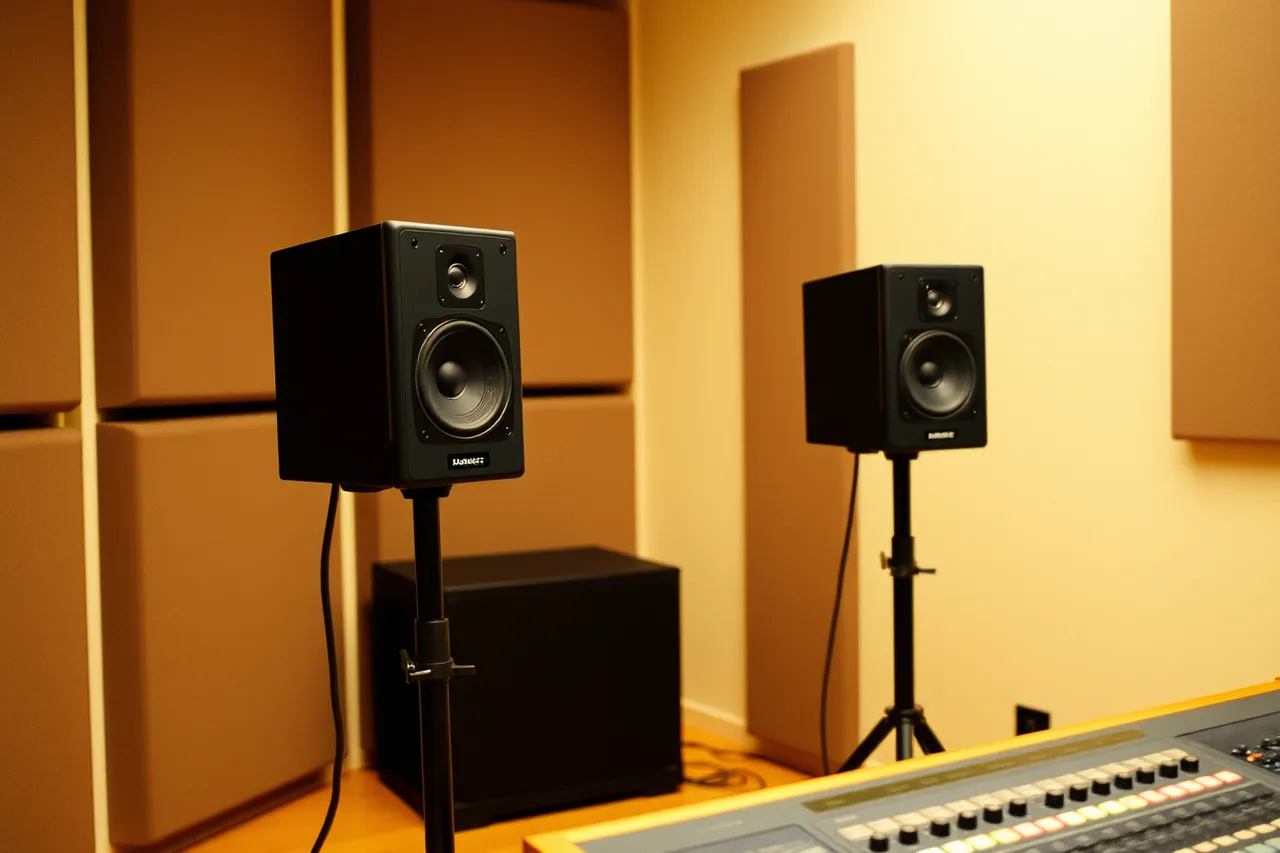
Two practical points. First, monitors and room are one system: position, distance, and treatment behind the listening position matter as much as the speakers.
Yamaha HS5s at about $200 each, or Kali Audio LP-6 v2s for the same money, cover a small control room. Adam Audio T7V at about $300 to $350 each, and Genelec 8030C at about $800 each, buy more accuracy in the low end. IsoAcoustics ISO-155 stands, about $100 a pair, decouple the cabinets from the desk.
Second, level discipline is part of the equipment plan because long days at high volume damage the hearing this trade depends on. The Occupational Safety and Health Administration publishes standards and guidance on recognizing, evaluating, and controlling occupational noise exposure.
Read it, apply what fits your operation, and keep a reference level you mix at rather than drifting louder. A handheld sound level meter costs $30 to $50, and 83 dB SPL C weighted at the listening position is one common calibration convention.
The machine room, power, and noise
Computers, drives, and amplifiers make noise and heat. Both are the enemy of a recording space.
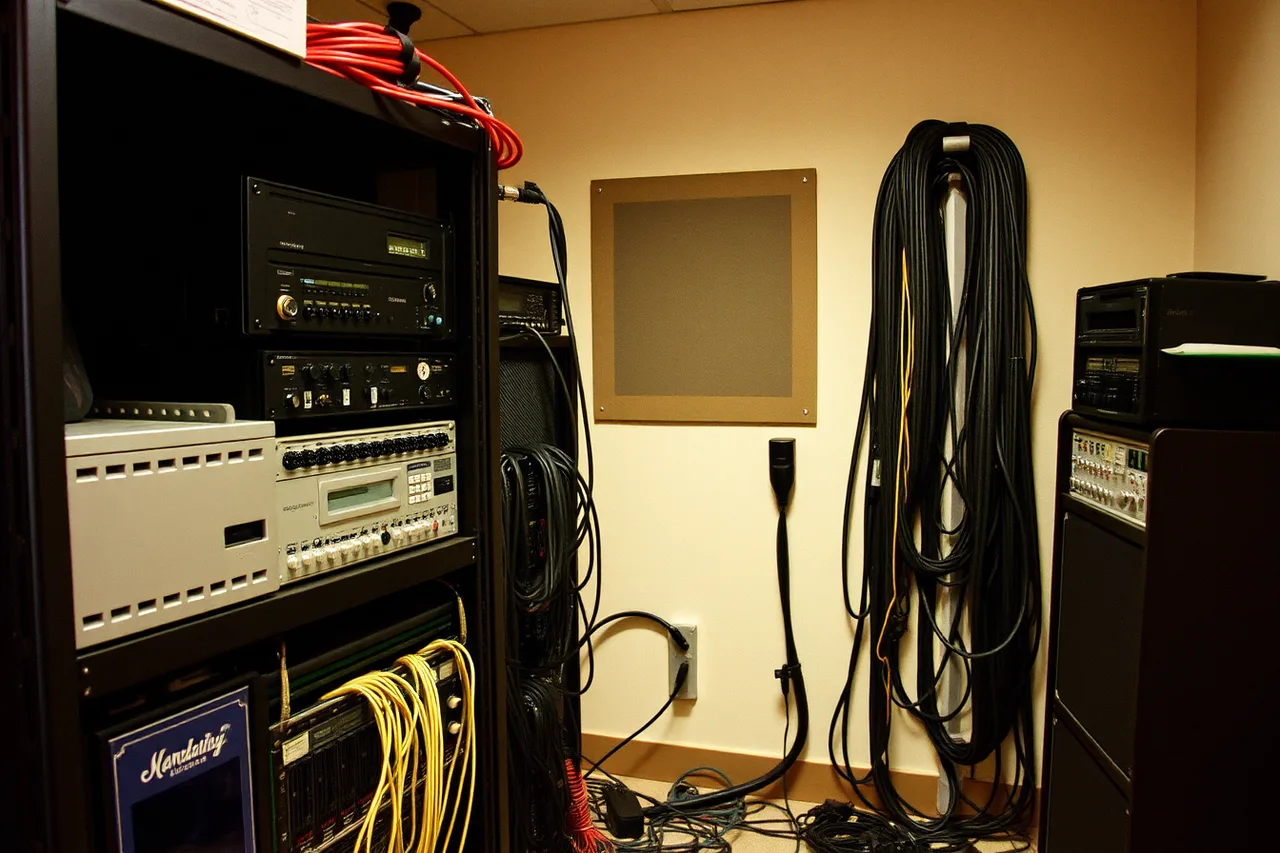
Put them somewhere else if the building allows it, with a cable run rather than a fan in the live room. Get the electrical supply designed and installed by a licensed electrician, with adequate capacity, proper grounding, and separation from equipment that puts noise onto the line.
A Furman M-8x2 rack conditioner, about $150, or a Furman PST-8, about $200, gives the rack one defined outlet. Neither replaces the electrician's work on the building supply.
Cabling, rigging, and stands are the safety side of the same subject. Trailing cables in a dark live room are the most common injury risk in a studio, and the fix is management rather than warning signs.
OSHA's safety management guidance describes a program that finds and fixes hazards before an incident does. That is the right frame for a room that fills with visitors, instruments, and cable runs several times a week. Your licensing and compliance work is where those arrangements get written down.
Storage: you are holding other people's work
A studio accumulates client sessions, and those files are not yours.
Plan for three things. Working storage that is fast enough for the sessions you run. A backup that happens automatically, because a manual backup is one that stops during a busy month. And a copy that lives outside the building, since fire and water do not respect a second drive on the same shelf.
A Samsung T7 Shield at 2 TB, about $200, covers working sessions over USB-C. Backblaze Personal Backup runs about $99 a year for one computer, and Backblaze B2 bills roughly $6 per terabyte per month for the offsite copy.
Then write the policy: how long you keep sessions, what happens when the period ends, and how a client requests their files. Keep the studio's role factual.
The Copyright Office study on copyright and the music marketplace shows how many separate interests can attach to one recording. Retention and delivery are studio policy; ownership and clearance are questions for the U.S. Copyright Office or a qualified music attorney.
Keeping it working
Gear fails between sessions or during them, and the difference is entirely down to whether anyone checks.
Set intervals rather than reacting, checking microphone lines for continuity and noise and reviewing drive health and backup logs. Inspect stands, cables, and connectors, and listen to monitoring periodically with material you know well. A Behringer CT100 cable tester, about $60, or a Whirlwind Qbox, about $250, makes the cable check a two minute job.
Log findings, because a maintenance log lets a studio tell a client why a session ran clean; without one, the studio guesses along with everyone else.
Decide who is allowed to touch what. Where clients bring their own operator, decide in advance which parts of the signal path are open and which are not, and label the patch accordingly.
That sounds bureaucratic until a visiting engineer repatches the machine room at 2 a.m. and the next session opens on a chain nobody can explain. Keep a short written note of the default state beside the patchbay.
Common questions
How much should I spend on microphones?
Less than most people do, and later than most people do.
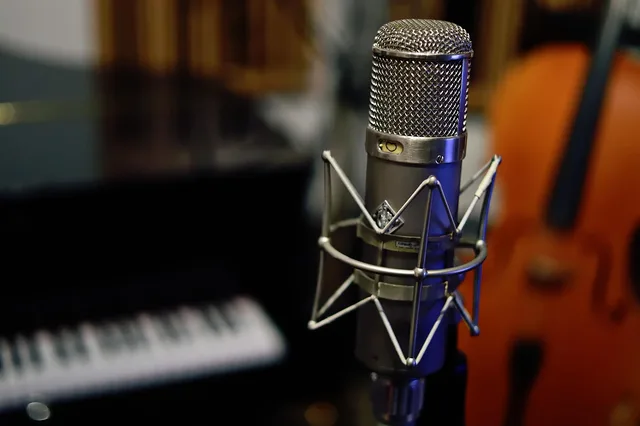
A Shure SM7B at about $400, an Audio-Technica AT2020 at about $99, and a Sennheiser MD 421-II at about $400 cover vocals, loud sources, and toms for under $1,000. A small set covering the sources you actually record beats a wide collection assembled before you know what walks through the door.
Do I need analog outboard gear?
Only where it changes the sound you sell or the speed of your workflow. Otherwise it is capital sitting in a rack, and the same money spent on the room would be audible to every client.
A Focusrite ISA One at about $600 gives one clean channel, and a Warm Audio WA-73 at about $700 adds a Neve style color on vocals and drums.
Is a large console worth it?
It depends on whether clients are buying that workflow. Some are, and will book for it. Where they are not, the console is furniture with a maintenance bill.
How do I decide between owning and renting?
Own what holds value and gets used weekly. Rent what dates fast or appears in one session a quarter, and let the client pay for it inside the booking.
What does a starter studio cost in 2027?
For a one room space that is already quiet, expect roughly $4,000 to $6,000 for treatment, microphones, an interface, monitors, headphones, and storage. Add a computer, a DAW, and isolation work and the figure lands nearer $8,000 to $12,000. Labor rates and room size drive most of the spread.