Guides
Music studio lease costs with the hidden lines included
Music studio lease terms that decide whether a room can operate: the noise and hours clauses, alterations, occupancy cost lines, and what to put in the offer.
What to take away
- A studio lease is judged on four clausespermitted use, hours and noise, alterations, and reinstatement. Rent is the fifth question, not the first.
- A music studio lease costs more than rent. Base rent, service charge, and insurance are only the start. Utilities, electrical work, quiet ventilation, isolation, and reinstatement all land on the tenant.
- Acoustic construction is a fixture. Read the end-of-term clause before you build, because you may be paying to remove what you paid to install.
- Ask what rights the landlord has over property left at the premises, and get advice on how that interacts with client media stored on site.
- Put the requirements in the offer. Once the lease is signed, everything you assumed becomes something you hoped.
The clauses that decide whether a studio can operate
Most commercial leases are written for tenants who arrive at nine and leave at six and make no noise. A studio is neither. Read these clauses in full, in the landlord's own wording, before rent is discussed.
Lease clauses to read in full
- Permitted usename recording, rehearsal, teaching, events
- Hours of accesslate entry cost stated
- Noise and nuisancewording, standard, judge
- Alterationswhat you may build, consent needed
- Reinstatementwhat must be removed at end
- Repairswho maintains roof, plant, services
- Assignment and sublettingtransfer or share
The site selection reasoning explains which buildings are worth reaching this stage with, and the visit protocol is what should have happened before you asked for the draft lease.
Permitted use. Confirm the use clause names a recording studio or audio production, not just office or general business. Check that mixing, mastering, teaching, and client sessions are covered. If the use is narrower, ask for a consent letter or an amendment.
Hours and noise. The hours clause sets when you may operate. Night tracking needs 24-hour access in writing. The noise clause may set a decibel limit at the boundary or a nuisance standard judged by complaint.
Alterations. Check whether landlord consent is required and whether it can be withheld. Consent that will not be unreasonably withheld is worth having. Check who pays for permits and who does the work.
Reinstatement. The end-of-term clause says what you remove and what you restore. Look for a cap on the cost, an exclusion for acoustic construction, and a defined standard of condition.
Site requirements before you sign
- Ceiling heightmeasure slab to slab, not floor to ceiling. A finished ceiling of 9 to 12 ft suits a live room. An 8 ft control room works with less treatment space.
- Floor loadinga ground-floor slab on grade is simplest. Upper floors are often rated for 50 to 100 pounds per square foot live load. Dense walls and a floated floor add weight, so ask a structural engineer.
- Powera mid-size studio often needs 100 to 200 amps at 120/208 V, three phase. Use separate circuits for gear, HVAC, and lighting. Check the service and the upgrade cost.
- Zoningconfirm the zoning code and the certificate of occupancy allow a studio and client visits. Light industrial or mixed commercial usually works. Sites next to housing often fail on noise.
- Loading accessa door at grade helps. Check clear width, lift capacity above ground, and delivery hours.
What occupancy costs: rent, service charge, power, and build
Rent is the headline and rarely the majority of the commitment. Build the full list before comparing two spaces. A cheap unit that needs a new electrical supply and quiet ventilation is not cheap.
What occupancy costs
| Line | Typical range |
|---|---|
| Base rent | $12 to $30 per sq ft per year industrial or flex; $25 to $65 urban creative, before NNN |
| Service charge | $2 to $6 per sq ft per year; ask if capped |
| Insurance | $800 to $3,000 per year; contents and liability $500 to $2,500 more |
| Utilities | $0.10 to $0.20 per kWh; $200 to $1,200 per month |
| Electrical | Subpanel $1,500 to $4,000; 3-phase upgrade $5,000 to $25,000 |
| Ventilation | $3,000 to $15,000 installed |
| Isolation | Room within a room $75 to $250 per sq ft; floated floor $15 to $35 per sq ft |
| Reinstatement | Demolition $5 to $20 per sq ft; isolated room removal $10,000 to $50,000 |
| Rent during build | 3 to 6 months; $6,750 to $13,500 at $2,250 per month |
- Base renttypically $12 to $30 per sq ft per year in industrial or flex space, and $25 to $65 per sq ft in urban creative buildings. A 1,500 sq ft room at $18 per sq ft is $27,000 per year, or $2,250 per month. NNN means taxes, insurance, and common area are extra.
- Service charge or common area costtypically $2 to $6 per sq ft per year. On 1,500 sq ft that is $3,000 to $9,000 per year. Ask if it is capped.
- Property insurance: a business owner's policy for a small studio often runs $800 to $3,000 per year. Contents and liability coverage can add $500 to $2,500 per year.
- Utilitiescommercial electricity typically runs $0.10 to $0.20 per kWh in most US markets as of 2026. A studio with HVAC, computers, and climate control can use 2,000 to 6,000 kWh per month, or $200 to $1,200 per month.
- Electrical worka new subpanel costs $1,500 to $4,000. Dedicated circuits run $300 to $800 each. A 3-phase service upgrade can cost $5,000 to $25,000. Permits often add $500 to $5,000. Licensed electrician rates often run $85 to $150 per hour.
- Quiet ventilationa dedicated ERV or HRV with duct silencers typically costs $3,000 to $15,000 installed. Standard rooftop units often fail the noise test for tracking rooms.
- Isolation and treatmenta room within a room costs $75 to $250 per sq ft. A floated floor runs $15 to $35 per sq ft. Resilient channel and double drywall run $8 to $20 per sq ft. GIK Acoustics and Auralex panels are typically $30 to $300 each.
- Reinstatementdemolition and disposal typically cost $5 to $20 per sq ft. Removing an isolated room can run $10,000 to $50,000. A reinstatement cap or exclusion is worth more than a small rent discount.
- Rent during the buildplan for 3 to 6 months. At $2,250 per month that is $6,750 to $13,500 before the first session.
The Small Business Administration business guide covers where a commitment of this size sits in a launch sequence. It sits early and it constrains everything after it, which is why the equipment and setup plan has to be sized after the occupancy list is complete rather than beside it.
The alterations problem: you are building a fixture
Isolation is built into the building. Independent walls, floated floors, decoupled ceilings, and acoustic doors become part of the structure. In most leases that means they belong to the landlord at the end of the term.
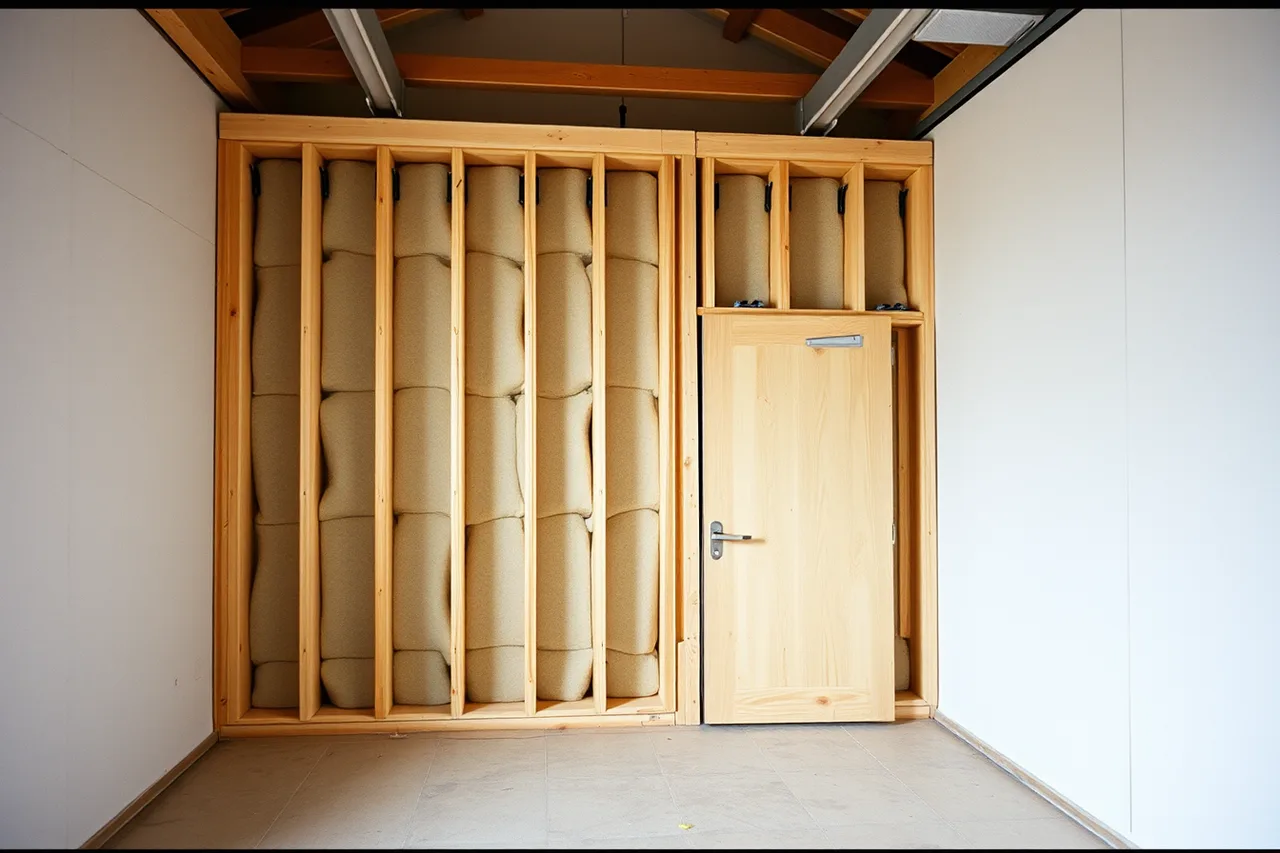
Two consequences follow. First, ask for the alterations consent and the reinstatement position in writing before you commit. Second, weigh the term length against the build. A short lease with a heavy build is a short lease with a very expensive year one.
Movable items are different. Panels, traps, gobos, and everything on the equipment checklist come with you. Keep that boundary clear in your own records so that an end-of-term negotiation is about facts rather than memory.
Accessibility, and the parts of the site you do not control
Your clients arrive through a shared entrance and use shared corridors. The Justice Department's small business accessibility guide sets out the concepts that apply to existing facilities, including barrier removal and accessible routes. Some of what it describes is the landlord's responsibility rather than yours.
Ask before signing what has already been assessed for the common parts and who is responsible for what. A landlord who has considered it will have an answer. Take anything consequential to a qualified professional rather than to a leasing agent.
Client media and what sits on the premises
A studio stores other people's work. Drives, backups, and archived sessions live in the building, and they are not yours.
Ask an attorney what rights the landlord has over property at the premises in a default or at the end of a term. Ask how that interacts with media that belongs to clients.
Ownership of the recordings themselves is a copyright and contract question, not a property one. The Copyright Office study on the rights that attach to a recording shows how many distinct interests can sit behind a single session.
Keep an off-site copy regardless. Say in your session agreement how long you retain files and what happens to them afterward.
Requirements to write into the offer
Do not leave these to be discussed later.
Requirements to write into the offer
- Permitted use naming recording, rehearsal, teaching, events
- Access at operating hours with late entry cost
- Alterations consent for acoustic construction, reinstatement capped
- Rent-free or reduced period covering the build
- Electrical supply confirmed by your own electrician
- Written disclosure of neighbors and complaint history
Staffing follows the lease rather than leading it. The hours you are permitted to open decide the shifts you can offer. Settle the clauses first, then plan hiring and training around what the building allows.
Common questions
Should I sign a longer lease to get a lower rent?
Only if the room is right. Term length is how you pay for a heavy fit-out, and it is also how you get trapped in a building that turned out to have a gym above it. A five-year term at $2,250 per month is $135,000 in base rent before service charge.
Who pays for soundproofing?
Usually the tenant, and usually without recovering it. That is why the reinstatement clause matters so much: paying twice, to build and then to remove, is a real outcome.
Can a landlord stop me recording at night?
The lease can, through the hours clause, and local rules can too, separately. Check both. A verbal assurance from an agent is not either of them.
What if a neighbor complains after I have built the room?
Then the noise clause decides the outcome, which is why reading its exact wording early is worth more than any assurance given during a viewing.