Guides
7 parts of music studio marketing, explained
Music studio marketing that works: how studios are actually found, why the room is the proof, what to publish, and the claims you must be able to support.
What to take away
- Studios are found through people, not through campaigns. Referral and repeat work carry most rooms, and everything else feeds those two.
- Publish what removes a client's uncertaintywhat a session costs, what happens on the day, and what they leave with.
- The second booking is the business. A first session is marketing that has been paid for once.
- Every claim you make has to be one you could support if asked, and reviews have their own rules.
1. How studios are actually found
Four routes, in roughly the order they matter for most rooms.
How Studios Are Actually Found
- Client referralslargest source
- Engineers bring own clients
- Local search
- Hearing the result
How studios are actually found
- A past client books again, or sends someone who books. Referral and repeat work is the largest source for most rooms.
- An engineer or producer brings their own clients. Powerful, and it makes the relationship question in your staffing arrangements urgent rather than theoretical.
For a typical small room, referral and repeat work produce most bookings, commonly in the range of 60 to 80 percent. Treat that as a typical planning range, not a measured figure, and check it against your own inquiry log.
Notice what is missing: advertising to strangers who were not already looking for a studio. It occasionally works and it is rarely where a small room should start.
2. The room is the marketing
Clients cannot evaluate a preamplifier from a website. They can hear a drum sound.
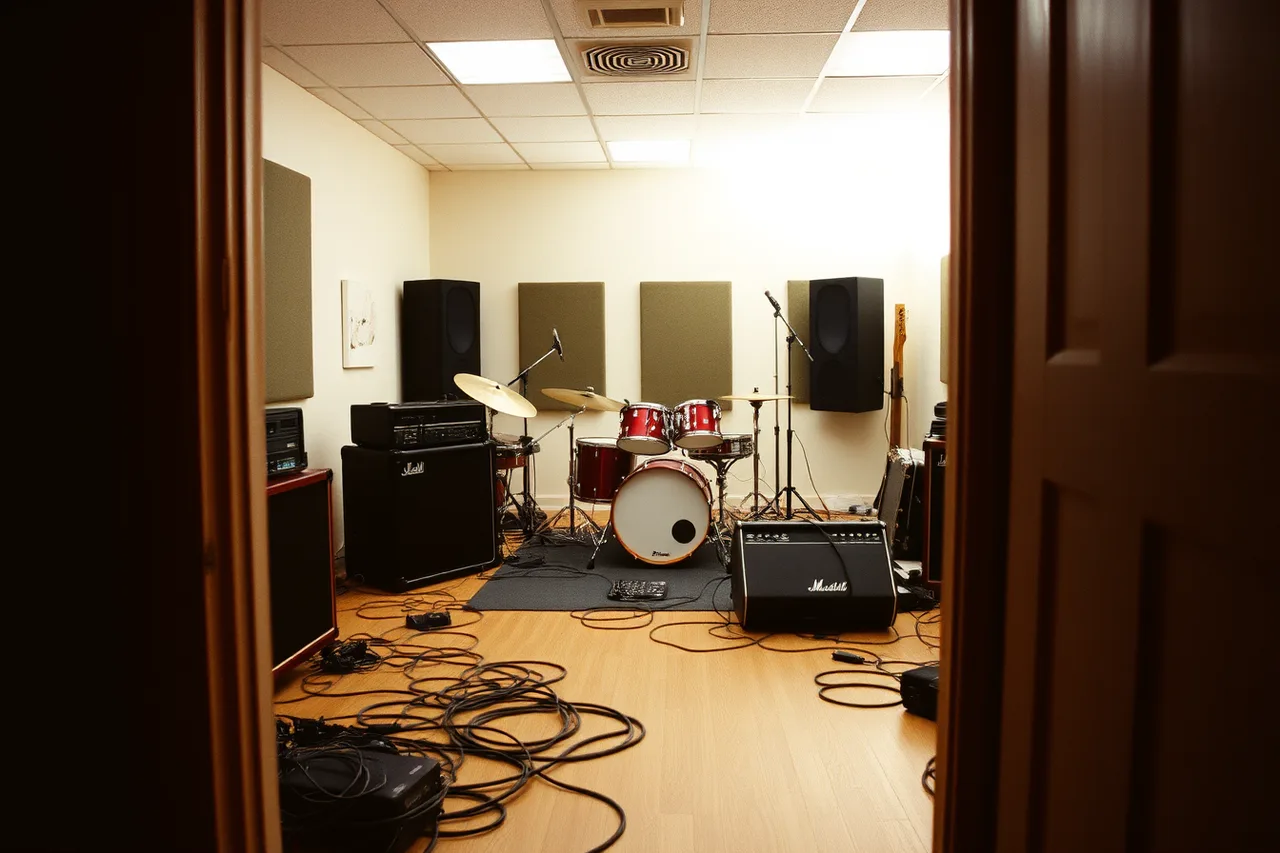
So the strongest marketing asset a studio has is audio recorded in it, with permission, presented plainly. A short page with three or four examples does more than a long equipment list, because it answers the only question the client has: will my record sound good if I come here.
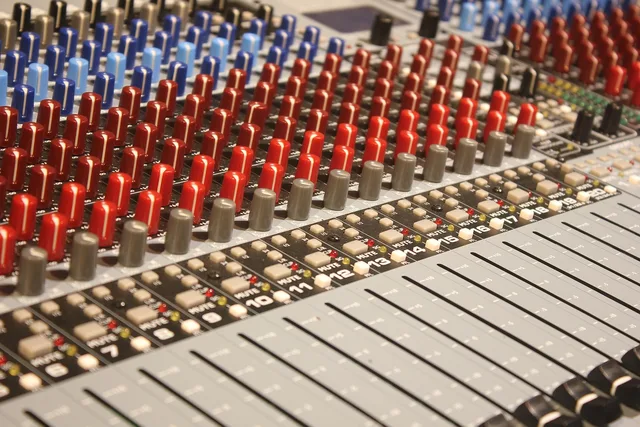
Photographs of the room matter for the same reason. Not stylized shots of a fader bank, but the live room with instruments in it, the control room from the client's seat, and the space where people wait. Clients are buying a day in a building and they want to know what the day looks like.
Ask permission before publishing anyone's work, in writing, and be precise about what you are publishing and where. Ownership of the recording is not yours to assume, which is why the studio's position on rights lives in your reviewed agreement and in your compliance file rather than in a marketing decision made in an afternoon.
3. What to publish, and what it has to prove
| What to publish | What it removes | The mistake to avoid |
|---|---|---|
| Audio examples | Doubt about the result | A single genre, so everyone else assumes you cannot do theirs |
| Rate structure | Fear of an open-ended bill | A headline number that excludes most of the job |
| What happens on the day | Uncertainty for first-time clients | Writing it for engineers rather than for artists |
| What you deliver, and when | The commonest source of disputes | Vagueness about formats and revisions |
| Who will be at the desk | The question clients ask last and care about most | Implying a named engineer who may not be free |
The second row is where honesty and marketing meet. A published rate must be complete enough for a client to work out their own bill. The Federal Trade Commission's advertising guidance for small businesses sets the standard: claims should be truthful and not misleading. The document is Advertising FAQs: A Guide for Small Business.
What to Publish and Why
Publish
- Audio examples
- Doubt about result
- Rate structure
- Fear of open bill
- What happens on the day
- First-timer uncertainty
- What you deliver
- Disputes
- Who is at the desk
- Last question asked
- The room itself
- Reason to leave bedroom
Removes
- Audio examples
- Single genre
- Rate structure
- Headline excludes most
- What happens on the day
- Written for engineers
- What you deliver
- Vague formats
- Who is at the desk
- Implying named engineer
- The room itself
- Equipment lists instead
Mistake
- Audio examples
- Rate structure
- What happens on the day
- What you deliver
- Who is at the desk
- The room itself
Qualifications a reader needs belong where they will see them. That is also good business: a client who feels ambushed by the invoice does not come back and does tell people.
The underlying pricing structure is what makes a publishable rate possible in the first place. If you cannot explain your own rate in three lines, that is a pricing problem appearing as a marketing one.
4. Reviews and testimonials, honestly
Reviews matter for a local business, and they are also the area where small operators get into the most trouble.
Ask every client the same way, whether or not you think they were happy. Do not offer anything in exchange, filter who gets asked, or write anything yourself.
The Federal Trade Commission's guidance on soliciting and paying for online reviews is worth reading in full before setting up any review process, because several practices that feel harmless are not. The document is Soliciting and Paying for Online Reviews: A Guide for Marketers.
Testimonials on your own site follow the same logic. Use the client's actual words, with permission, and do not edit them into something they did not say.
5. The second booking is the whole business
A first session costs you something to win. A second one costs almost nothing, and a client on their fourth session is the most profitable work in the building.
Retention Habits That Earn Second Bookings
- Ask one question a week after delivery
- Warn clients before retention period ends
- Tell regular clients when engineer leaves
- Start sessions on time
- Deliver files when promised
Sessions that start on time, files that arrive when promised, and an engineer who behaved well at hour ten are what produce the second booking. The operations routine is therefore marketing spend, even though it appears nowhere in a marketing budget.
Three low-effort habits help. Ask one question a week after delivery, in one line. Tell clients when their retention period is approaching so the files are not a surprise. And when an engineer moves on, tell their regular clients yourself rather than letting them find out on the way to a session.
6. Claims you must be able to support
Be careful with four kinds of statement.
Claims You Must Be Able to Support
- Resultsa mix is not guaranteed
- Equipment you do not own on the day
- Who has recorded hereneeds permission
- Implied label or artist association
- Say what is checkable instead
Anything about a result, since a mix is not a guaranteed outcome. Anything about equipment you do not own on the day, since hire arrangements change. Anything about who has recorded at the studio, which needs permission and accuracy. And anything implying an association with a label, an artist, or an institution that has not agreed to it.
Say what is checkable instead: the room, the process, what is included, and what you deliver. The site and building reality and the signal path you have actually built give you more than enough true material, and true material does not have to be defended later.
7. When marketing is the wrong fix
Sometimes a quiet calendar is not a marketing problem.
Is Marketing the Wrong Fix?
Clients book once and do not return?
Fix retention, not advertising
Continue diagnosis
If clients book once and do not return, more inquiries will not help. If the rate is below the floor, more bookings make things worse. If the room has a noise problem or the monitoring is misleading, marketing accelerates the damage by bringing more people to hear it.
Diagnose before spending. A month of asking why previous clients did not rebook is cheaper than a quarter of advertising, and it usually points at something you can fix in the building.
Take the last twenty inquiries and write down, for each, where it came from and what happened to it. Most owners discover two things at once: the sources they assumed were working produced almost nothing, and a large share of inquiries were lost to a slow reply, not to price.
A studio that answers within the hour wins bookings from studios that answer the next day. That is a staffing and process decision, not a marketing budget. A typical small-room marketing budget is a few hundred dollars a month: directory listings, one photo or video session a year, and the time to ask for reviews.
Common questions
Do I need social media?
Useful for showing work and the room, and rarely the thing that produces a booking on its own. Treat it as a place to keep evidence rather than as a channel to be fed daily.
Should I publish my rates?
Publishing the structure filters the wrong inquiries and saves both sides time. Where work varies widely, publish the basis and what is included rather than a single number.
Can I use a client's track on my website?
Only with permission, in writing, and only for what they agreed to. Ownership questions go to the U.S. Copyright Office or a qualified music attorney rather than being assumed either way.
What is the single highest-return marketing activity?
Asking a satisfied client, at the end of a good session, whether they know anyone else who needs a room. It costs nothing and it is the route most bookings actually come through.