Guides
How to start music studio operations: local factors
How to start music studio operations: local rules, rights, hiring, power, and building limits; a research list with UK and New York examples.
What to take away
If you are asking how to start music studio operations in another country, separate the portable parts from the local rules, registrations, labor classifications, rights systems, power supply, and building stock.
- Acoustics are physics and they behave the same everywhere. Almost everything wrapped around the room is local.
- The building stock in a city sets a ceiling on what you can build long before your budget does.
- Noise rules, tenancy law, employment law, and music rights are all local questions, and none of them can be answered from a general page.
- Electrical supply, voltage, and grounding practice differ by country and quietly decide which gear is usable and how much of it needs replacing.
- Research the local demand sources before the local suppliers. A city with no session players changes the business more than a city with no dealer.
What does not change anywhere
Low frequency energy still builds in corners. Parallel walls still flutter. A thin partition still passes speech between two rooms, and mass, air gaps, and decoupling are still the way to stop it. Monitoring still has to be trustworthy before any mix decision made in front of it means anything.

The commercial physics travel too. Downtime is still the real constraint, changeover still eats billable hours, and a session that runs long still costs you the next booking. The reasoning behind your equipment and setup choices carries across borders unchanged, because it is driven by the signal path rather than by the market.
What changes with the country
Nearly everything else. This is the part people underestimate, and it is worth writing down as a research list rather than an assumption.
| Item | Why it moves | Where the answer lives |
|---|---|---|
| Permitted hours and noise limits | Set by local authority, often by district | Local planning or environmental office |
| Tenancy terms and repair duties | National and local property law | A local commercial property attorney |
| Employment status of engineers | National labor law | The relevant labor authority |
| Music rights and collection | National copyright law and local societies | A qualified music attorney |
| Mains voltage, frequency, grounding | National electrical standard | A licensed local electrician |
Named local examples
In New York City, the New York City Department of Environmental Protection (DEP) administers the NYC Noise Code. Check zoning and legal building use with the New York City Department of City Planning and the New York City Department of Buildings (DOB), and confirm the rules for the exact address and proposed studio use before signing.
Music-rights societies also differ by country. In the UK, PRS for Music administers performing rights in musical works, MCPS administers mechanical rights, and PPL licenses public use of recorded music on behalf of performers and recording rightsholders. Which permissions apply depends on what the studio does; a recording session, public playback, and administering royalties are not the same activity.
The U.S. Copyright Office's Copyright and the Music Marketplace: A Report of the Register of Copyrights explains how many separate rights sit behind one recording even within one country, and how music licensing paths differ by use. Across countries, rights structures differ.
Treat your own licensing and compliance work as a per-jurisdiction task and take specifics to a local attorney.
The building stock decides more than the budget
You cannot build a tracking room out of a bad shell. A studio needs mass, and mass is a property of the building you rent.
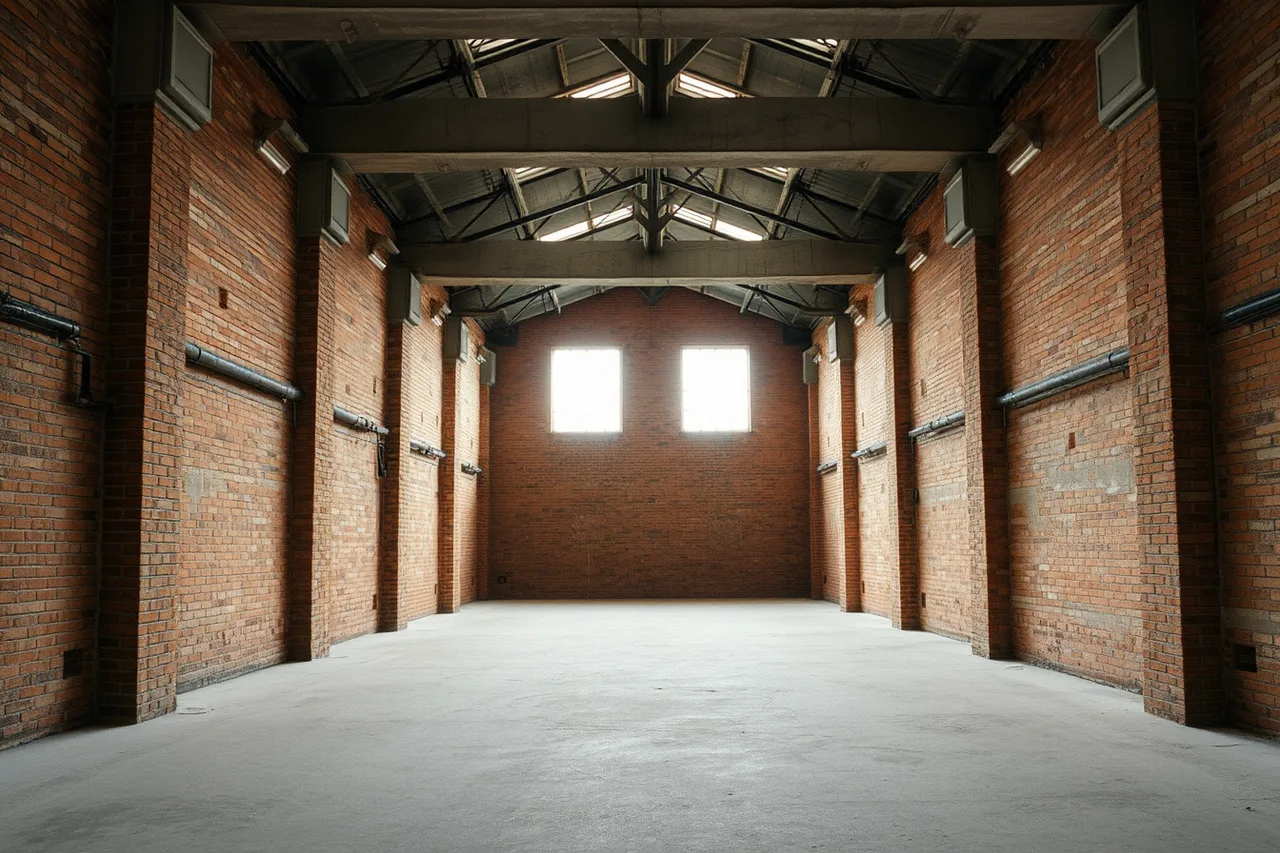
Older masonry and concrete industrial buildings usually give you that. Modern light frame construction usually does not, and no amount of interior treatment converts a partition wall into a party wall. Basements offer isolation and bring water and access problems. Upper floors bring structure-borne transmission down through the frame, which is the complaint that ends leases.
So the sequence in a new city is: find out what buildings exist and what they are made of, then decide what studio is possible, then price it. Doing it in the other order produces a budget for a room the city cannot supply.
A first-week research list for a new city
- Walk the districts where creative tenants already are, and note the construction type rather than the rent.
- Ask three local musicians who they currently record with and what they cannot get locally.
- Find out who supplies session players, and whether the city has any. A studio in a city with no players sells a room, not a service.
- Read the tenancy conditions on two real listings, specifically the clauses on noise, hours, alterations, and subletting.
- Confirm the business registration and tax steps. For the U.S. route, the Small Business Administration business guide shows the shape of that sequence, and the Internal Revenue Service page on starting a business covers structure, identification, and recordkeeping where U.S. rules apply. In the UK, a private limited company files its incorporation application with Companies House (paper Form IN01 or the online service), and tax matters go through HM Revenue & Customs (HMRC); the right route depends on business form. Outside the United States and the UK, find the equivalent national body and read its guidance.
- Price a comparable room locally, by booking one, before setting your own rate.
Hiring and running the room in an unfamiliar market
Two things surprise owners in a new country. First, local employment law, not custom, defines the engineer relationship: in Great Britain, ACAS offers employment-status guidance, while HMRC's Check Employment Status for Tax (CEST) tool addresses tax status. Those are different questions, and a contract label alone does not settle them. That changes how you approach hiring and training.
Second, scheduling norms differ. Session start times, expected day lengths, and how lateness is treated vary enough to break a calendar built on assumptions from elsewhere. Build the daily workflow after a month of watching local sessions, not before.
Growth decisions can wait. If the first room works, the expansion questions will still be there in a year, and you will be answering them with real booking data instead of a forecast.
Common questions
Can I use my existing gear in another country?
Some of it. Typical nominal household supply is 120 V at 60 Hz in the United States and 230 V at 50 Hz in the United Kingdom, so check each device's input label before using it. A plug adapter changes plug shape, not voltage; frequency compatibility and grounding also matter. Ask a licensed local electrician before plugging in anything with a mains transformer, and expect that some items are cheaper to replace than to convert.
Is it easier to open where there is no competition?
Not usually. A city with no studios often has no session ecosystem either, which means no supply of clients who already know what studio time is worth. Competition is evidence of demand.
How do I check the noise rules before signing a lease?
Ask the local authority directly, in writing, about permitted hours and limits at that address. Also ask the landlord for the lease clause in full. The two answers are not always compatible, and finding out afterward is expensive.